Designing small bathrooms with a shower Practical tips and ideas
Designing a small bathroom with a shower is a challenge, but with the right tips and ideas, even the smallest of spaces can be transformed with a functional and beautiful design. With clever space planning and space-saving bathroom furniture, ceramics and other bathroom products, you can make the most of your small bathroom with a shower.
6 tips for showers in small bathrooms – with and without a sloping roof
When bathroom space is limited, creative solutions and visual tricks are required. Here are our ideas for the shower in a small bathroom:
Tip 1: Install a floor-even shower
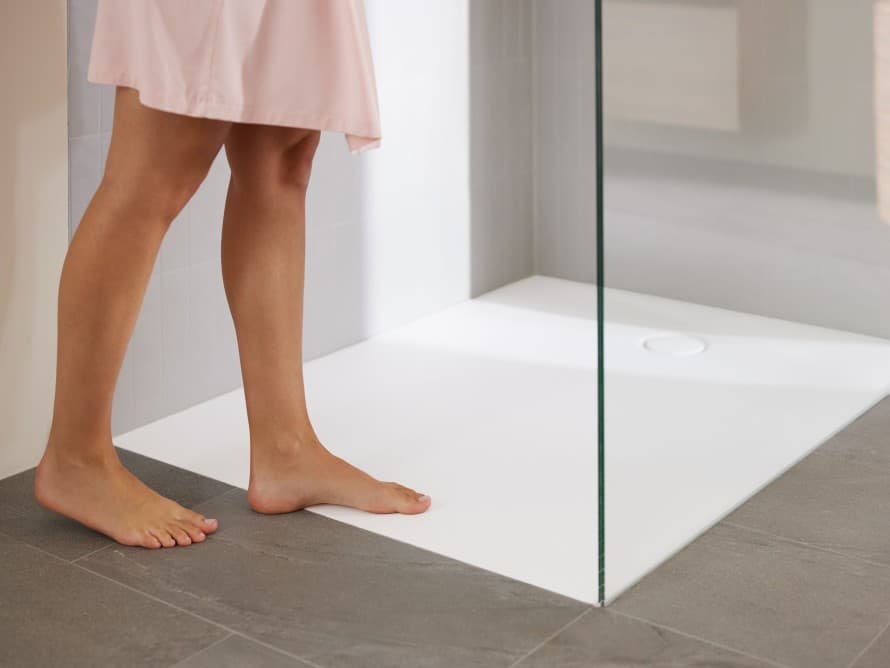
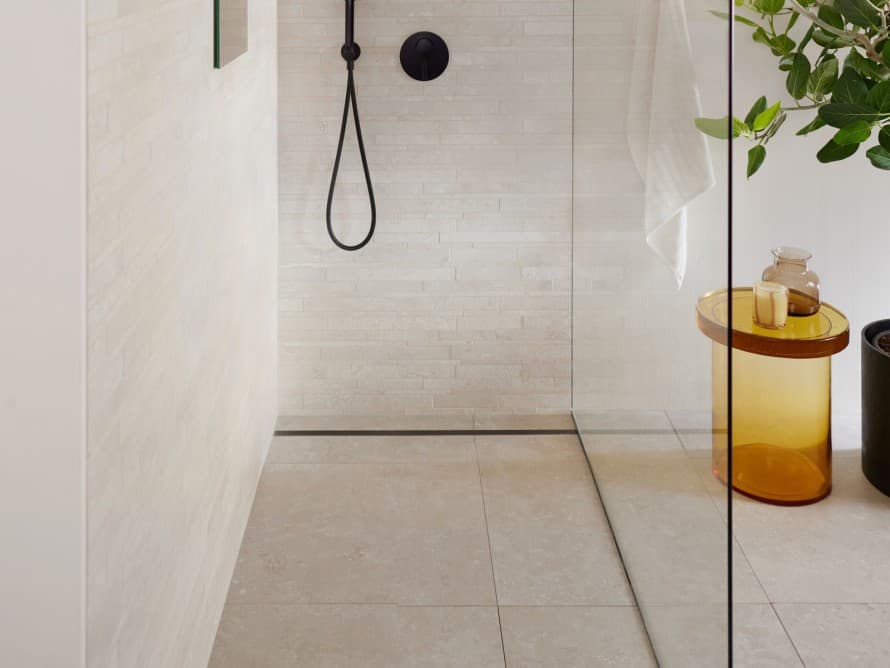
An open, floor-even shower provides modern, minimalist design and ensures a calm overall atmosphere in the bathroom. The step-free access to the shower area creates a smooth transition to the rest of the room which makes the bathroom seem larger and more airy.
In contrast to classic shower trays, a floor-even shower offers more freedom of movement when showering, and it is also easy to clean. There are hardly any corners and edges where dirt can accumulate because of the open surfaces.
A modern, barrier-free shower is also an attractive feature that can increase the value of a property.
As the technical components – such as the trap and discharge pipe – have to be accommodated in the floor structure, professional planning and installation by a sanitary specialist is important.
Tip 2: Use a glass walk-in shower panel
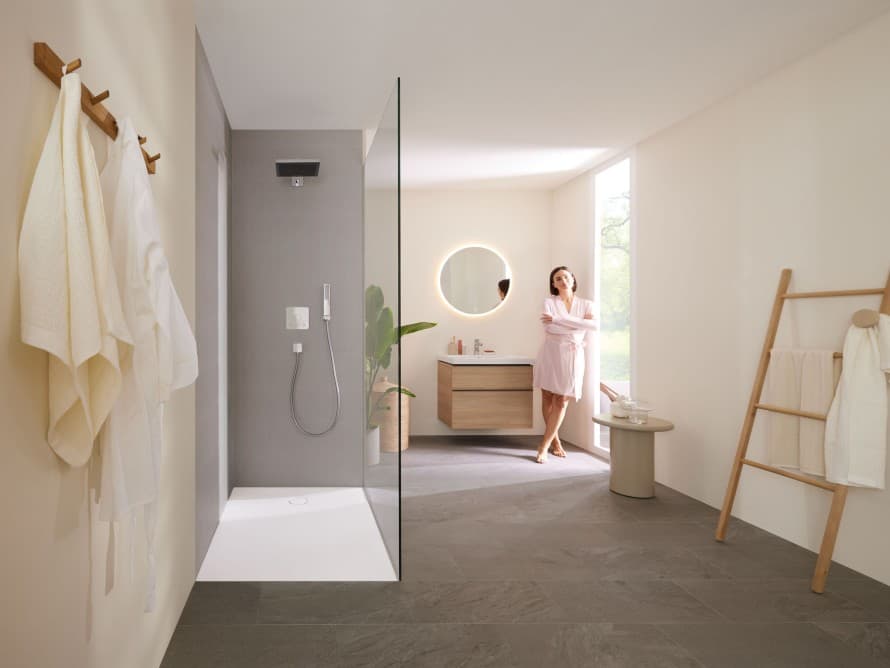
While a classic shower curtain or a masonry wall creates as a visual barrier, a glass walk-in shower panel allows light to pass through freely and keeps the space visually open. With a glass panel, the room not only appears larger, but also more elegant and of higher quality.
The transparent partition blends seamlessly into any design concept and gives the bathroom a high-quality, timeless touch. In addition, glass is particularly easy to clean and will retain its elegant appearance for many years.
Thanks to special installation elements, the walk-in shower panel can be integrated almost invisibly into the wall – creating a consistent overall look.
Tip 3: Include niches in your planning
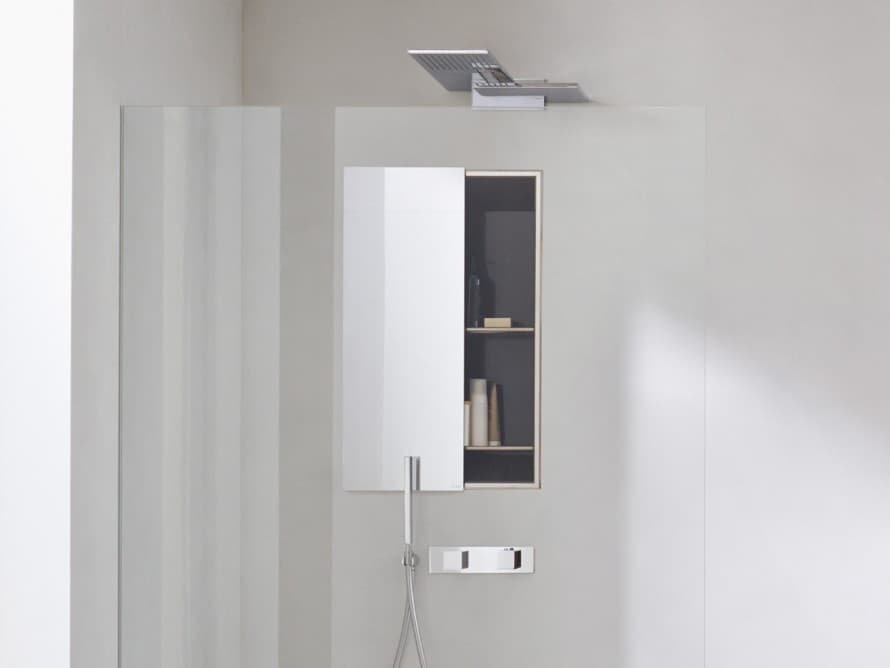
Wall niches are a clever way to keep a small bathroom tidy. They provide valuable storage space for care products without protruding into the room. In this way, you enjoy complete freedom of movement in the shower.
Because a niche storage box is integrated directly into the wall, it must be considered during room planning.
Tip 4: Special considerations for sloping roofs
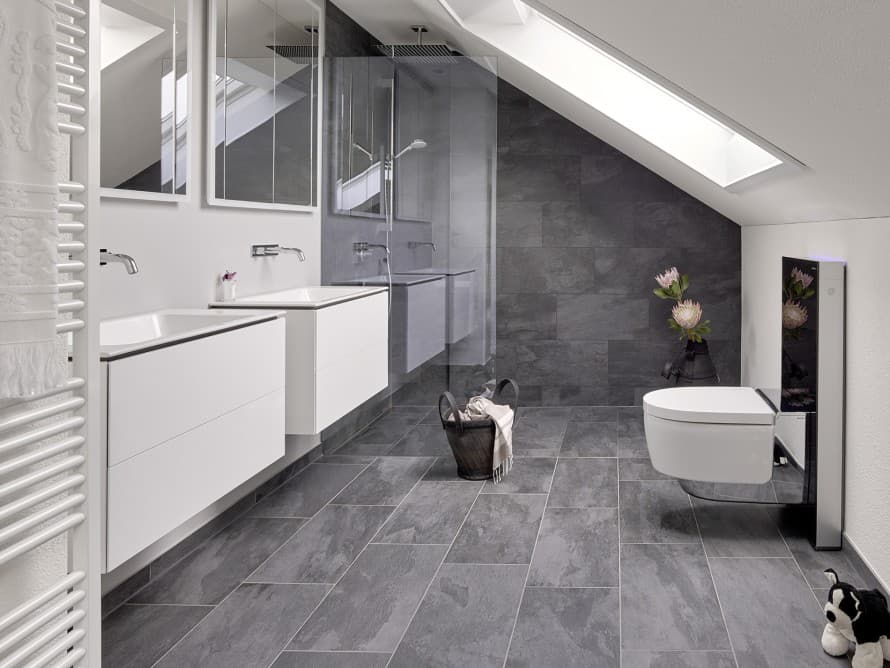
In small bathrooms with a sloping roof there are a few special points to bear in mind if the shower will be located under the slope.
The space required overhead is often underestimated: For comfortable showering, at least 20 cm of free overhead space should be planned, and as much as 40 cm for large overhead showers.
If the room height under the slope is not sufficient, it is advisable to move the shower area further into the centre of the room, where the room will be higher. In addition, the shower head should be positioned on the highest straight wall in the shower area in order to enable users to stand upright.
Both the slope itself and the transition between the wall and the sloping roof must be sealed watertight to avoid moisture damage.
Tip 5: Use light colours
The right choice of colour can make a big difference, especially in small bathrooms. Light colours are real space enhancers – they make a small bathroom with a shower feel more brighter and inviting. White and soft natural tones reflect light beautifully, creating a peaceful atmosphere in the bathroom.
Whilst trends come and go, a white bathroom is a timeless classic. Those who like it modern can use decorative panels or water-resistant concrete paint – both of these stylish alternatives make the bathroom appear bigger.

Tip 6: Lay large tiles
A tiled floor throughout connects the shower area with the rest of the bathroom seamlessly. Large, light-coloured tiles – both in the shower and in the rest of the room – make the floor look like one continuous surface.
The small number of joints also supports the clear, tidy overall impression.
How to plan a small bathroom with a shower
Planning a small bathroom with a shower starts with analysing the floor plan and the functional requirements. The WC, washbasin and shower should be arranged so that they do not restrict either movement flow or accessibility. The fewer partitions and obstacles in the room, the more harmonious the bathroom feels.
Discover suitable solutions from Geberit
Space-saving showers: 4 variants
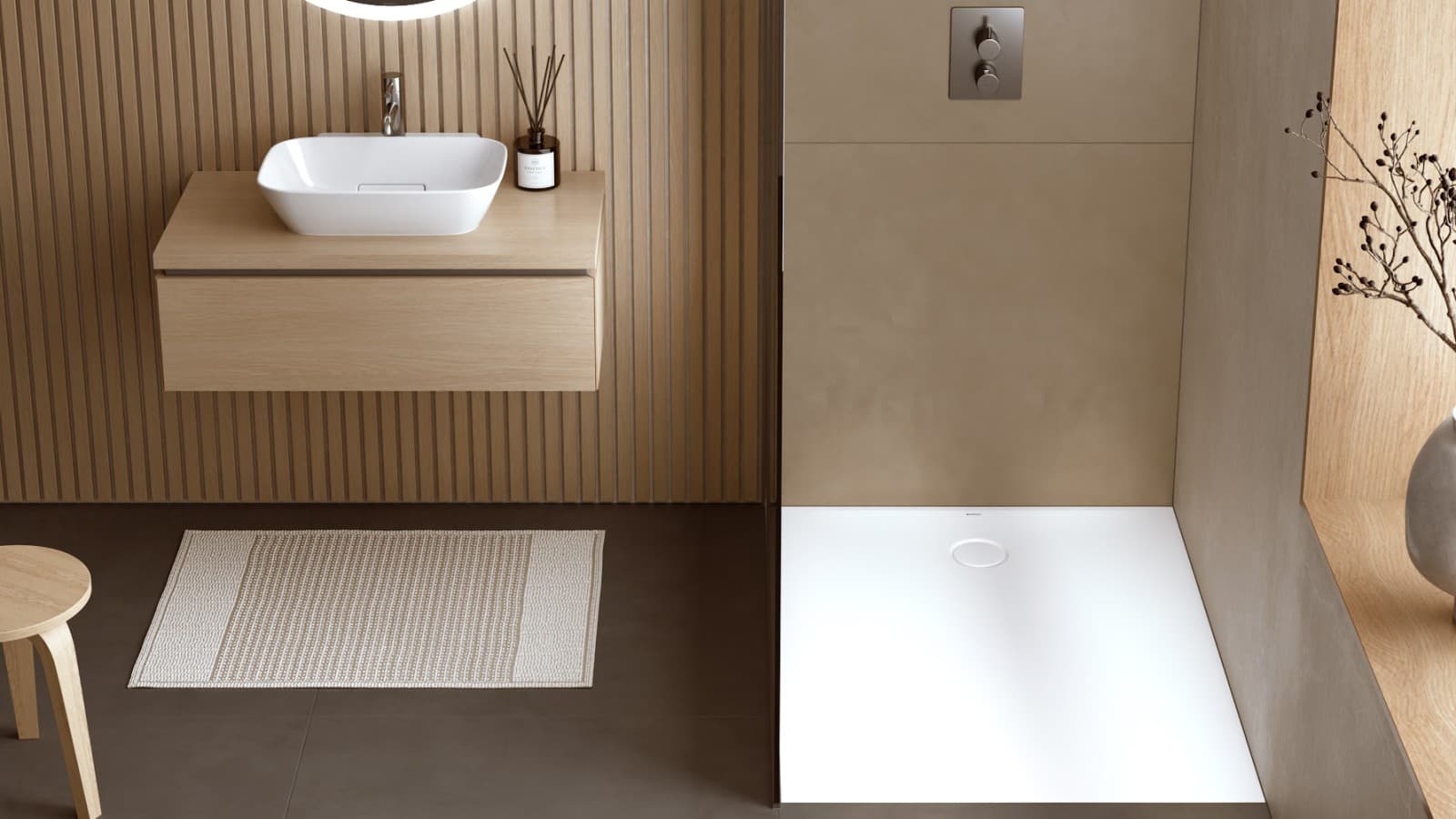
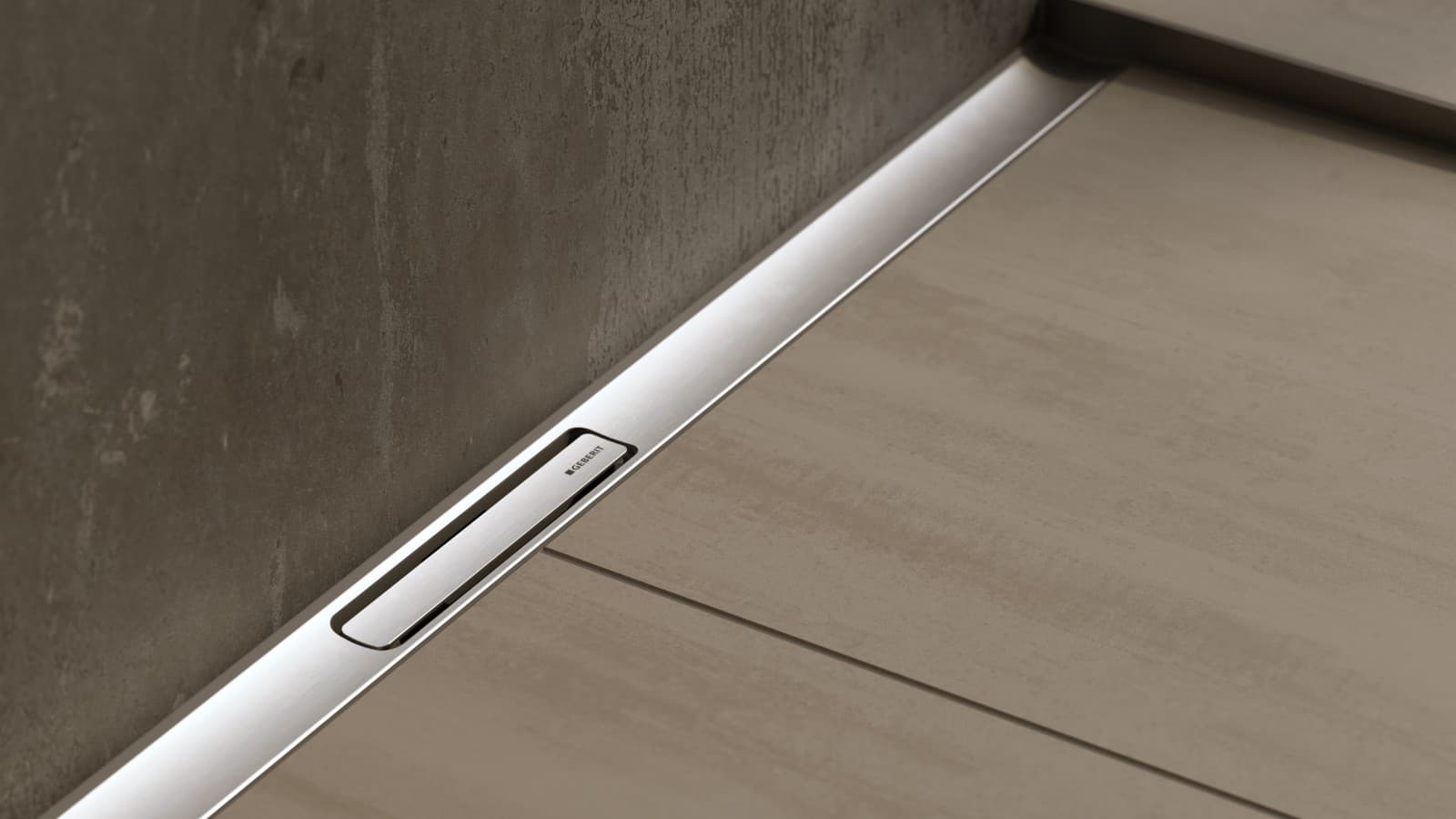
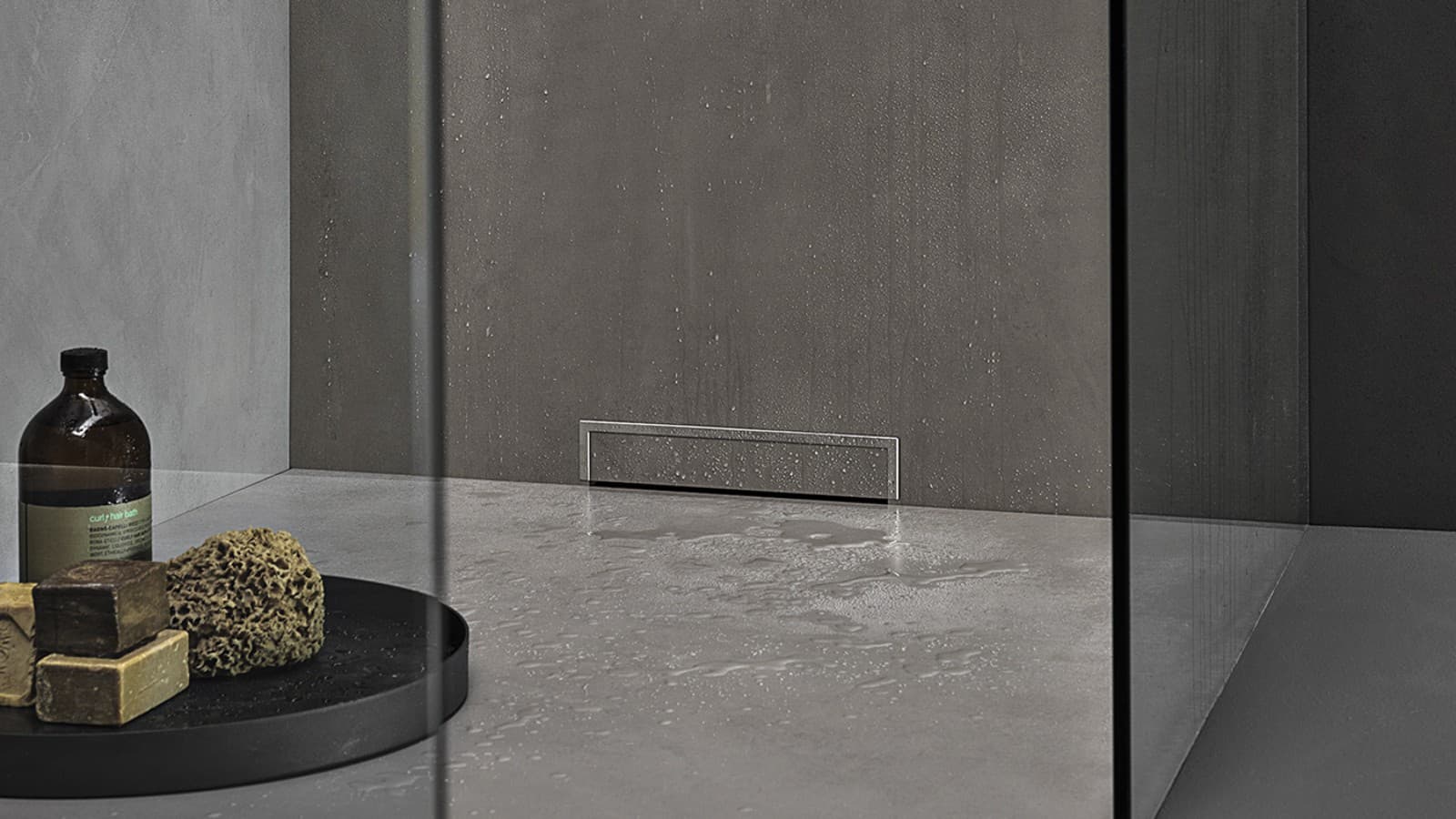
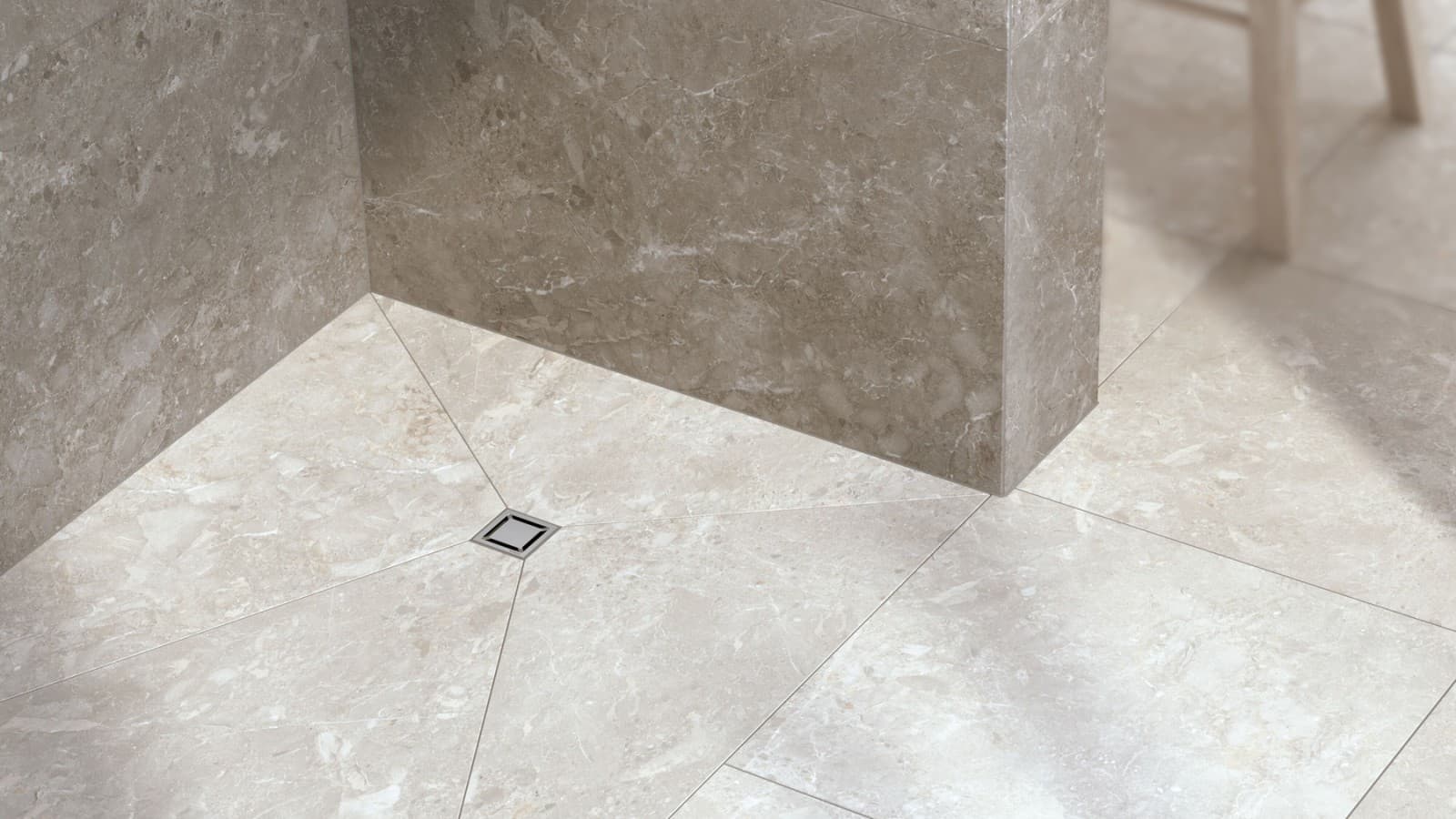
Small bathrooms in particular benefit from intelligently planned showers. A compact floor-even shower surface, a flexible shower channel that can be shortened in length, an elegant wall drain or a classic floor drain – all of these products help to use the existing space to optimum effect. Without steps or visible barriers, the bathroom feels not only more spacious and calmer but also offers greater comfort and accessibility.
Small bathrooms staged with light
In small bathrooms, the bathroom lighting is a central factor. Instead of a single ceiling lamp several light sources lend structure and depth to the room. A mixture of direct light for everyday use and soft, indirect lighting creates a pleasant atmosphere.
With Geberit ComfortLight the lighting can be flexibly adapted – perfect for small bathrooms where every lighting accent counts.
Frequently asked questions about designing a small bathroom with shower
Is a wall drain or a floor drain better for a space-saving shower?
A wall drain offers maximum freedom of design of the shower surface and shows off the full surface area of the floor – ideal for visually enlarging a small bathroom or guest bathroom.
A floor drain on the other hand is classic and versatile, especially when it comes to standardised shower zones.
Both shower drains can be integrated well into small showers.
What is the minimum space required for a shower?
For a comfortable shower, a minimum size of at least 80 x 80 cm is recommended. General rules of thumb: The fewer obstacles there are in the room, the more spacious it will feel – this is a key consideration when designing small bathrooms with a shower.
Which tools can help me with bathroom planning?
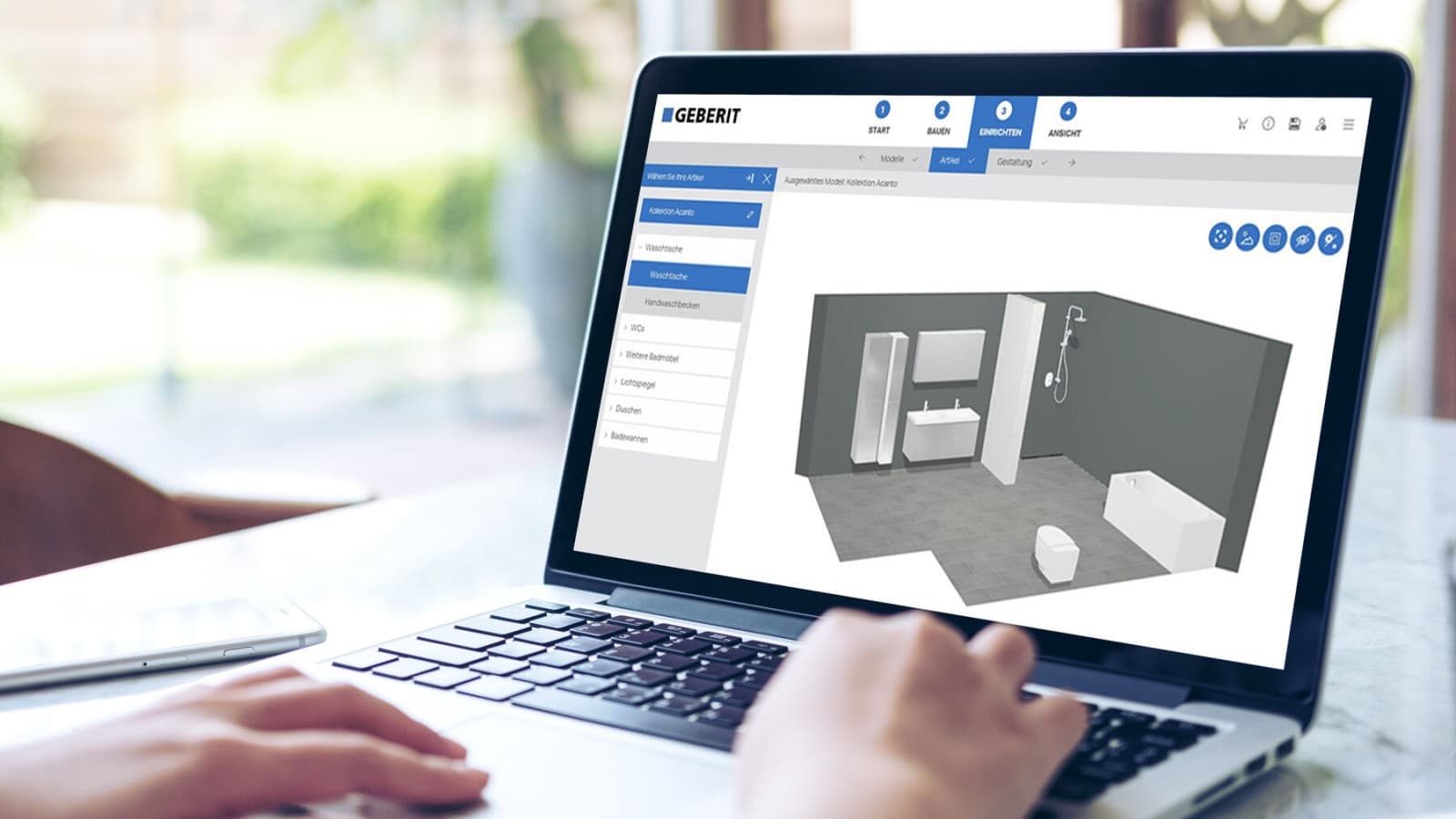
Use the Inspiration Tool to create an overview of the variety of products and solutions and find out what you like and what you don't like. If you already have some initial ideas and would like to try them out, the 3D Bathroom Planner from Geberit is a powerful tool: It can be used to digitally visualise products, colours and room layouts in your own bathroom.
Newsletter Register now
Stay up to date
Our newsletter provides fascinating insights and handy tips on how your bathroom can make your life easier.
Read similar posts
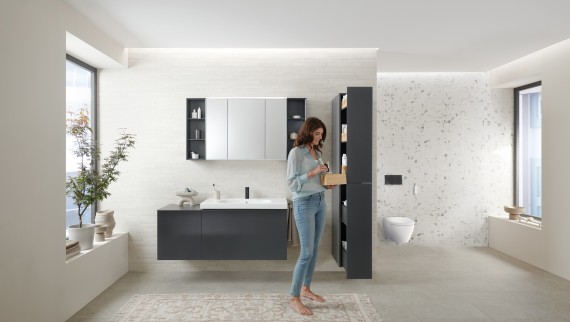
Bathroom inspirations
Looking for inspiration for your new bathroom? Discover the latest trends and ideas for practical bathroom equipment.
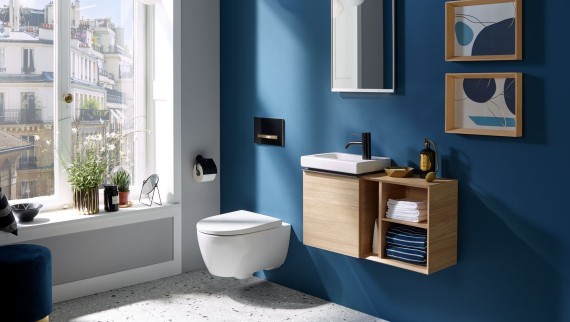
Guest toilet: tips and ideas
Guest toilets and guest bathrooms are usually quite small. Guest toilet decor ideas.
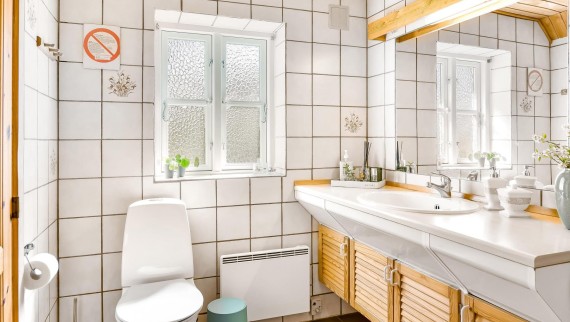
Small bathroom renovation – before and after
Looking to renovate a small bathroom? Even a few square metres can feel spacious and cosy with a good design.
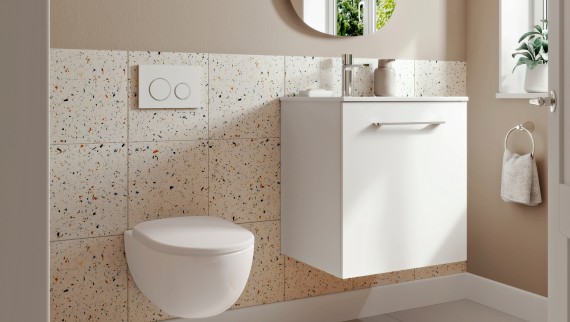
Designing a small bathroom measuring 4 m²
Even when space is limited, Geberit has a lot of ideas and inspiration for small bathrooms measuring 4 m²!
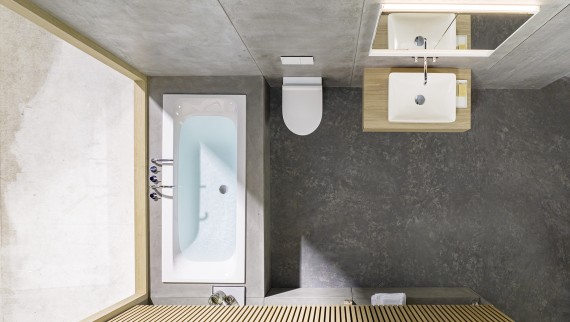
Inspiration and ideas for every bathroom floor plan
Bathrooms come in all shapes and sizes. Here, we offer ideas for every bathroom floor plan.